 Nov 14 2026
 Nov 07 2026
 Oct 31 2026
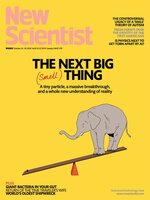 Oct 24 2026
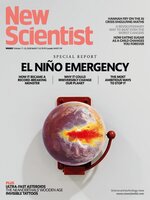 Oct 17 2026
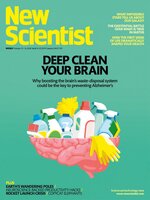 Oct 10 2026
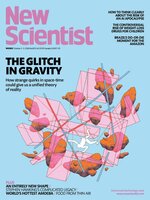 Oct 03 2026
 Sep 26 2026
 Sep 19 2026
 Sep 12 2026
 Sep 05 2026
 Aug 29 2026
 Aug 22 2026
 Aug 15 2026
 Aug 08 2026
 Aug 01 2026
 Jul 25 2026
 Jul 18 2026
 Jul 11 2026
 Jul 04 2026
 Jun 27 2026
 Jun 20 2026
 Jun 13 2026
 Jun 06 2026
New Scientist covers the latest developments in science and technology that will impact your world. New Scientist employs and commissions the best writers in their fields from all over the world. Our editorial team provide cutting-edge news, award-winning features and reports, written in concise and clear language that puts discoveries and advances in the context of everyday life today and in the future.
Space history’s dark ages • We must preserve space age artefacts for future generations – but who will foot the bill?
The race to save Hubble • NASA is turning to the private sector for solutions to keep the Hubble Space Telescope from its impending fiery and fatal fall back to Earth, reports Matthew Sparkes
Parkinson's may be driven by 'vicious cycle' that disrupts brain cleaning
Vibrations may boost brain drainage • Gently shaking the body seems to help flush out a protein linked to Alzheimer's disease
Stunning ancient engravings found in Spanish cave
First look at 'ultraquantum' turbulence
Mars may be volcanically active
What causes mega heatwaves? • An unexpected feedback loop that is currently not included in climate models helps to explain why the world is experiencing record-shattering heatwaves, finds Madeleine Cuff
Particle smasher gets first glimpse into the smallest realm ever explored
Early Neanderthals may have made huge knives as a flex
Tiny magnet could be fastest spinning visible object
The deadly return of landmines • 3D printing and drones have helped mines become a key weapon in the Russia-Ukraine war
Electricity-emitting toothbrush may help fight plaque
Covid vaccines had big return on investment
Zapping brain temporarily helps you think harder
Iron Age 'king' was probably a woman • Historians assumed that Verica, a British ruler who prompted the Roman invasion in AD 43, was a man, but there are clues suggesting they got it wrong, finds Michael Marshall
Microplastics could be changing the colour of the Pacific
Oldest-known dinosaur red blood cells discovered
Small oil and gas wells have outsized pollution impact
Peanut allergies may not last • An unexpectedly large proportion of babies with peanut allergies quickly grow out of the condition, but it is unclear what causes the transience, finds Alice Klein
Foot-stiffening socks could help you run further for longer
Inca children were drugged before being sacrificed
Views Columnist • Turing versus The Traitors I came up with a mathematical model I hoped would help me win The Traitors. Unfortunately, events then got in the way, says Hannah Fry
Views Columnist • Too hot to handle Will frogs really boil to death if their environment warms too slowly to notice? While it is considered a myth, the frogs in James Woodford's backyard suggest otherwise
Views Columnist • Facing the facts Your body uses collagen to give your skin strength and elasticity, so supplements seem to make sense to reduce wrinkles. But Alice Klein finds it isn’t this simple
Light wave
Losing touch • A new book argues that we are outsourcing our thinking to AI, with dangerous consequences for our brains.
Views Culture • Things you people wouldn’t believe A new Blade Runner TV series is out this month. Sci-fi columnist (and superfam) Emily H. Wilson rereads the source material, Philip K. Dick’s seminal novel Do Androids Dream of Electric Sheep?
Views Your letters
Back to the past • Quantum physics assumes the past doesn’t matter. But if that’s is wrong, we might solve one of the deepest riddles in physics, says Karmela Padavic-Callaghan
"I felt this looming presence, a shadow-like...